Responsible Pet Sales
Pets Canada’s Statement on Responsible Pet Sales
Pets Canada recognizes the important role pets play in our lives. Buying a pet should be done responsibly. The decision to acquire a pet must be taken with full knowledge of the facts.
Selling a pet must also be done responsibly. Pets Canada believes that the following elements are essential to help and advise pet owners:
- The seller ensures, to the best of his/her knowledge, that the animal offered for sale is in good health;
- The seller provides potential pet owners with the information necessary to ensure that the pet is well cared for and managed;
- The seller makes every reasonable effort to ensure that the right animal is matched with the right owner.- Seller provides appropriate pre- and post-sale support to the animal’s new owner;
- The seller is able to provide the appropriate food and advise the buyer on products and accessories essential to the animal’s life.- The seller keeps appropriate records as required by law.
As such, Pets Canada provides the following space recommendations for pets kept in a retail environment:
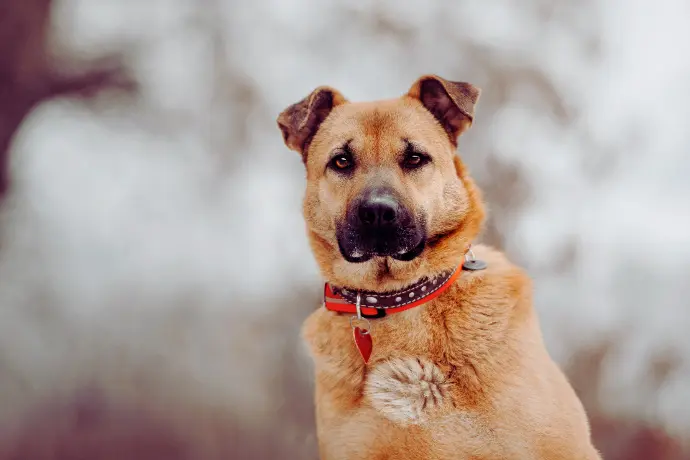
Recommended Retail Space Requirements: Dogs
In line with a decision made by Pets Canada’s National Board of Directors, the association was asked to prepare a set of recommend space requirements for pets kept in a pet retail environment, This document represents the first segment of the exercise and refers to dogs.
Direction in this area had become necessary in light of the increasing number of requests made to the association on this specific issue by municipal and provincial regulators, as well as numerous consumer and stakeholder groups. Lack of pet industry-accepted standards gave regulators no choice but to recognize other published space requirement standards, these standards not having been designed to address the needs of animals kept in a pet retail environment. As result of this, retailers have been harassed to meet standards originally designed for research establishments and breeding kennels, in the case of dogs for example.
The following document was achieved through extensive consultation. Expertise was taken from Pets Canada’s involvement with government regulators and Canadian animal care agencies. Through our involvement with the International Pet Advisory Council we were able to review pertinent documents from other pet industry associations around the world.
Among the references used to build this document we consulted; the Pet Care Manual from Pet Industry Federation UK, the National Code Practice from the Pet Industry Association of Australia, the Proposed Housing Standards for Cats and Dogs in Companion Animal Establishments from the Prince Edward Island Government, a referral to the State of Colorado’s published Animal Care Facilities guidelines and a document from the Ministry of Agriculture and Veterinary Authority of Singapore.
Assumptions
The following assumptions have been taken into account to come up with the recommendations appearing in this document:
- Definition of Pet retail environment. “Pet retail environment” means any place or premise used in whole or in part, whether on a permanent or temporary basis, for the purpose of retail sale, trading, , or otherwise transferring pet animals to the public. In addition to the traditional pet shop or wholesaler, pet retail environments shall include the keeping for transfer or the transfer of pet animals at temporary facilities such as flea markets, mobile facilities, department stores, merchandise outlets, discount outlets, pet animal shows conducting a sale, and other types of retail outlets
- The minimum needs for socialization and exercise are already being met;
- “Dog” means a male or female puppy, aged eight (8) weeks or more;
- “Housing unit” means any cage or other enclosure used to house a cat or a dog but does not include housing in a cage while transporting a dog or a cat outside the pet retail environment;
- “Shoulder height” means the height of a dog at the withers (measured from a flat surface on which the dog is standing to the highest part of the back at the base of the neck of the dog);
- Notwithstanding other assumptions, each dog should be kept in a housing unit with dimensions that will accommodate the height, weight and length of the dog comfortably, with enough room to stand, sit, lie down and turn around without restrictions or overcrowding;
- Notwithstanding the other assumptions, it is understood that while this document specifically refers to space requirements, it does assume that all other pertinent animal welfare considerations, as outlined in other Pets Canada publications, are being met.
- Other related activities (grooming, adoption, etc.) must also comply with the previous assumptions. However, housing dimensions will take into consideration the size of the animals concerned.
In light of the assumptions made, Pets Canada recommends the following as a suggested cage space requirements for dogs kept in a pet retail environment.
Recommended space requirements:
Dog | Minimum floor area* | Minimum height | Maximum number of of dogs per housing unit |
< 3kg: (< 6.6 lbs) | – 5000 square cm (775 square inches) | 50 cm (20 inches) | 3 |
3kg < 10kg: (> 6.6 < 22lbs.) | – 5000 square cm (775 square inches) | 60 cm (24 inches) | 2 |
10kg: (> 22 lbs) | -6000 square cm (930 square inches) | 60cm (24 inches) | 1 |
* In accordance with hypothesis number 5.
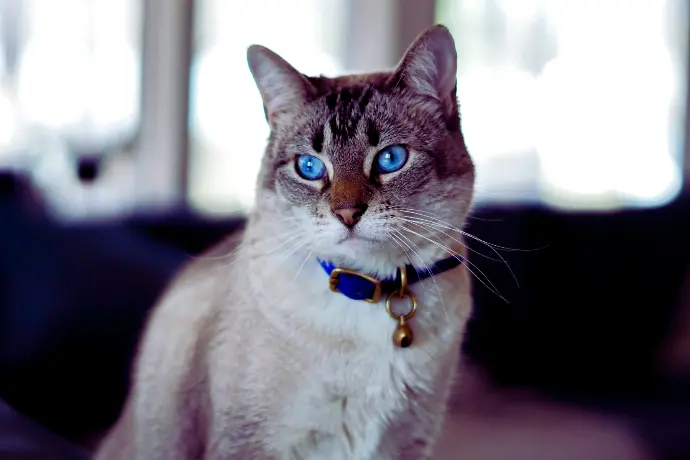
Recommended Retail Space Requirements: Cats
In line with a decision made by Pets Canada’s National Board of Directors, the association was asked to prepare a set of recommended space requirements for pets kept in a pet retail environment. This document represents the fourth segment of the exercise and refers to cats.
The following is the result of some research done from a compilation of documents from around the world. At this particular point in its development, the document reflects the expertise identified and selected by the staff of Pets Canada.
Among the references used to build this document we consulted; the Pet Care Manual from Pet Industry Federation UK, the National Code Practice from the Pet Industry Association of Australia, the Proposed Housing Standards for Cats and Dogs in Companion Animal Establishments from the Prince Edward Island Government, a referral to the State of Colorado’s published Animal Care Facilities guidelines and a document from the Ministry of Agriculture and Veterinary Authority of Singapore.
Assumptions
The following assumptions have been taken into account to come up with the recommendations appearing in this document. The following are a compilation of assumptions based on information from the documents listed in the above background
- Definition of Pet retail environment. “Pet retail environment” means any place or premise used in whole or in part, whether on a permanent or temporary basis, for the purpose of retail sale, trading, , or otherwise transferring pet animals to the public. In addition to the traditional pet shop or wholesaler, pet retail environments shall include the keeping for transfer or the transfer of pet animals at temporary facilities such as flea markets, mobile facilities, department stores, merchandise outlets, discount outlets, pet animal shows conducting a sale, and other types of retail outlets.
- “Cat” means an adult or juvenile cat, and includes a kitten (male and female) 8 weeks or older;
- The minimum needs for socialization and exercise are already being met;
- “Housing unit” means any cage or other enclosure used to house a cat but does not include housing in a cage while transporting a cat outside a companion animal establishment;
- Notwithstanding the other assumptions, it is understood that while this document specifically refers to space requirements, it does assume that all other pertinent animal welfare considerations, as outlined in other Pets Canada publications, are being met.
- Other related activities (grooming, adoption, etc.) must also comply with the previous assumptions. However, housing dimensions will take into consideration the size of the animals concerned;
- The housing units shall comply with the following:
Height of housing unit must not be less than 20 centimeters from the top of the head of the tallest cat to the ceiling of the housing unit, as measured when the cat is standing and must allow the animal to stretch fully upright on its hind legs.
b. It is recommended that cats/kittens from different litters should be housed in separate enclosures to avoid any possible cross-contamination. - If a resting perch is used then the following criteria are assumed;
The resting perch surface area should be no less than 600 sq cm and no more than 25% of the base floor surface area;
b. The cat can rest comfortably upon it;
c. The height of the resting perch should be high enough that the cat can fit underneath it;
d. The top of a hooded litter box can be considered as a resting perch surface.
e. The resting perch surface area shall be in addition to the floor space prescribed for a housing unit in the following table - Notwithstanding other assumptions, each cat should be kept in a housing unit with dimensions that will accommodate the height, weight and length of the cat comfortably, with enough room to stand, sit, lie down and turn around without restriction or overcrowding;
In light of the assumptions made, here are tables of recommended space requirements for cats and kittens.
Recommended space requirements:
Cat | Minimum base floor area in square cm | Minimum width in cm | Minimum height in cm | Maximum # of animals | Increased floor area for each additional animal in square cm |
Kittens (8-16 weeks) | 5000 | 60 | 60 | 4 | 1500 |
Adults/kittens 16 weeks + | 5000 | 80 | 75 | 1 | 2000 |
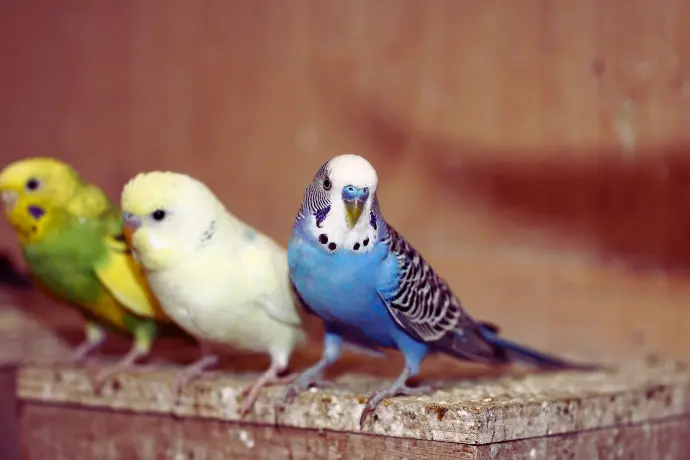
Recommended Retail Space Requirements: Birds
In line with a decision made by Pets Canada’s National Board of Directors, the association was asked to prepare a set of recommended space requirements for pets kept in a pet retail environment. This document represents the second segment of the exercise and refers to birds.
The following document is the result of some extensive research.. The document reflects the expertise identified and selected by the staff of Pets Canada. Through our involvement with the International Pet Advisory Council we were able to review pertinent documents from other pet industry associations around the world. Further consultation with PIJAC USA resulted in, among other references, a referral to the State of Colorado’s published Animal Care Facilities guidelines.
The first version of the document created some concerns, i.e. some of the calculations and cubic densities were in question, and as a result of the feedback from our membership, we have reviewed the method of calculation used in the formula originally proposed. Another methodology that was examined uses area (sq. cm.) rather than cubic space. The theory is that most birds will gravitate to the top of the cage. Hence, the height of the cage (and subsequently cubic measurement) is irrelevant and possibly misleading in determining space requirements.
Assumptions
The following assumptions have been taken into account to come up with the recommendations appearing in this document:
Definition of Pet retail environment. “Pet retail environment” means any place or premise used in whole or in part, whether on a permanent or temporary basis, for the purpose of retail sale, trading or otherwise transferring pet animals to the public.In addition to the traditional pet shop or wholesaler, pet retail environments shall include the keeping for transfer or the transfer of pet animals at temporary facilities such as flea markets, mobile facilities, department stores, merchandise outlets, discount outlets, pet animal shows conducting a sale, and other types of retail outlets.
Notwithstanding the other assumptions, it is understood that while this document specifically refers to stocking densities, it is assumed that all other pertinent animal welfare considerations, as outlined in other Pets Canada publications, are being met. More specifically this means:
- Primary enclosures are those animal enclosures in which the animal normally rests or sleeps (also referred to as housing).
- Primary enclosures shall be structurally sound and maintained in good repair to protect the animals from injury, to contain them, and to keep predators out. Primary enclosures shall be constructed such that they can be routinely maintained to allow animals to stay dry and clean (as appropriate for the species) and to provide convenient access to clean food and water. The floor of the primary enclosure shall be constructed to prevent injury to the animals’ feet and legs. All the surfaces of the primary enclosure must be constructed of a material that is water resistant and can be cleaned and sanitized. All primary enclosures shall allow each pet animal to turn around, exercise normal postural movements, and to experience necessary socialization with cage mates.
- Display cases may be utilized as primary enclosures during the workday; however, animals should not be kept in display cases overnight unless the display case also meets the requirements of and functions as a primary enclosure.
- Display cases must be constructed of a material that is water resistant and can be cleaned and sanitized. Display cases must be well constructed and kept in good repair. The area around the display case must be well ventilated to prevent odor buildup. Display cases for birds shall be maintained in good repair and constructed of non-toxic metal or other water resistant material, which can be cleaned and sanitized
In light of these assumptions, Pets Canada recommends the following as suggested cage stocking densities for birds kept in a pet retail environment.
General considerations: Minimum Space Requirements:
(a) Other than for head, wing and tail clearance, the housing must be large enough to provide full body extension without contact with the confines and must be wide enough in at least one direction to accommodate completely stretched wings.
(b) Enough food should be available at all times and fresh water should be provided daily. Water and food containers need to be placed to avoid droppings contaminating them.
(c) Two perches of different dimensions and shape is required for all perching birds (ex: parrots, budgies and finches, etc). For species who prefer to fly and jump from one perch to another, instead of climb, like finches and canaries, perches should be placed at both ends of the cage. Perches should be placed to prevent droppings from contaminating food, water and other birds.
(c) Objects or setups should improve and encourage entertainment (environmental enrichment) and should be provided for psittacids and corvids.
(e) Minimum space requirements for multiple birds housed temporarily depend on the calculated Housing Density Factor and the overall length of the bird as measured from the tip of the tail to the top of the head. Additional birds are added as space allows based on the formula.
The following calculation is will now be used to determine the number of birds that could be housed in a given enclosure:
A + B = C
- Where A = 1, (represents the calculation of the first bird’s space requirements (see Density Factor Chart)).*
If this is less than one (1), this means this cage is not suitable for this type of bird. - where Bis the calculation of how many additional birds may be suitably added,
- where Cis equal to the total birds suggested for that particular space.
Calculation of A:
(cage size in sq. cm.) – (single bird need in sq. cm.)
where the answer is > 0*, then A = 1
Calculation of B:
(cage size in sq. cm.) – (single bird need in sq. cm.) = B (rounded down)
(additional birds needs in sq. cm.)
Calculation of C:
A +B =C
Example: What is the suggested maximum number of cockatiels in a 2400 sq. cm. cage?
A=
(2400 sq. cm.) – (1st Cockatiel @ 1000 sq. cm. )
where the answer is > 0*, then A = 1
B =
(2400-1000)
additional birds needs @ 250 sq. cm. B = 5.6, rounded down to 5
C =
6
Measurements are based on the actual living space and do not include T-stands or perches attached to the outside of the cage.
Outdoor Aviaries. The size, shape, and design of the cages shall be appropriate for the species being housed and shall allow space, without overcrowding, for the normal exercise requirements of each bird. Flight cages shall be constructed to prevent injury to birds. A covered portion of each cage shall be provided where birds can avoid direct sunlight or adverse weather conditions and commingling with non-captive animals.
Density Factor Chart
Bird Group (size related) | Length of bird (cm) | Single bird needs (sq. cm) | Additional bird needs (sq. cm) |
African Grey | 1500 | 750 | |
Amazon | under 40 40+ | 1500 2000 | 750 750 |
Budgie | 675 | 125 | |
Cockatiel | 1000 | 250 | |
Cockatoo | under 35 35-40 45+ | 1500 2000 2800 | 750 1000 1400 |
Lovebird | 750 | 150 | |
Macaw | under 35 350-50 50+ | 1250 2250 3750 | 625 1000 1400 |
Parakeet Long Tailed | under 25 | 1000 | 250 |
Conure or Rosella | 25-35 35+ | 1000 1400 | 250 450 |
Caique or Pionus or Senegal | to 30 30-35 35+ | 800 1250 1500 | 350 625 750 |
Parrotlet | 400 | 150 | |
Lories or Lorikeets | under 30 30+ | 1250 2000 | 375 500 |
Dove | To 22.5 22.5+ | 500 1250 | 400 625 |
Finches including Silverbills and Waxbills | 12.5 12.5-17.5 17.5+ | 650 750 1000 | 100 150 200 |
Mynah | 1500 | 750 | |
Pekin Robin | 1000 | 200 |
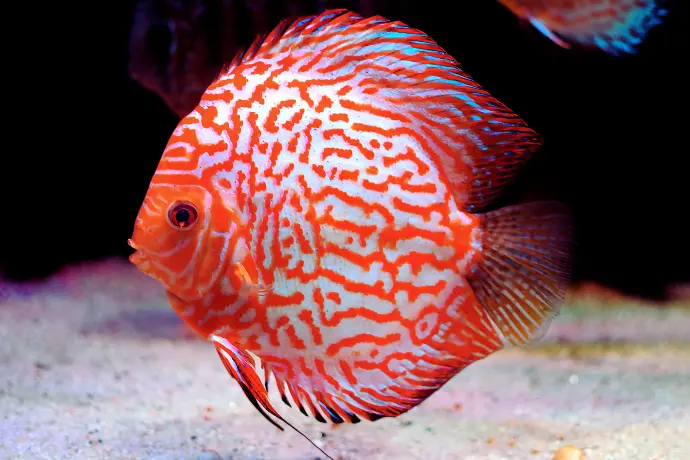
Recommended Retail Space Requirements: Fish/Aquatics
In line with a decision made by Pets Canada’s National Board of Directors, the Association was asked to prepare a set of recommended stocking densities for pets kept in a pet retail environment. This document represents the fifth segment of the exercise and refers to fish.
Assumptions
The following assumptions have been taken into account to come up with the recommendations appearing in this document. The following are a compilation of assumptions based on information from the documents listed in the above background.
- Definition of “pet retail environment”. A pet retail environment means any place or premise used in whole or in part, whether on a permanent or temporary basis, for the purpose of retail sale, trading, bartering, or otherwise transferring pet animals to the public. In addition to the traditional pet shop or wholesaler, pet retail environments shall include the keeping for transfer or the transfer of pet animals at temporary facilities such as flea markets, mobile facilities, department stores, merchandise outlets, discount outlets, pet animal shows conducting a sale, and other types of retail outlets.
- “Fish” means any aquatic animal.
- The minimum needs for the aquarium will allow fish the ability to swim and turn.
- Fish are not subjected to rapid fluctuations or extremes of temperature or chemical composition of the water.
- Fish are not subjected to extremes of light.
- “Aquarium” means any glass, plastic, acrylic or other enclosure used to house a fish but does not include bagging/cupping while transporting a fish outside a companion animal establishment.
- Notwithstanding the other assumptions, it is understood that while this document specifically refers to stocking densities, it does assume that all other pertinent animal welfare considerations, as outlined in other Pets Canada publications, are being met.
With the previous assumptions in place the criteria for stocking density for fish is based on water quality is determined by testing (by test strip or chemical testing kit).
Water Quality Criteria
Ornamental Aquatic Trade Association (OATA) Ltd.
For more information, see also the OATA Water Quality Criteria handbook.
Stocking densities – Ornamental Aquatic Organisms
It is virtually impossible to determine the quantity of aquatic organisms to be kept in a system purely on a weight or number of aquatic organisms per unit, volume, or water surface area.
The variation in holding system used, the quality of husbandry and the types of aquatic organisms stocked vary so greatly that it would render any such system too complicated to be practical or too simple to be useful.
The maintenance of water quality standards can be used to determine working stocking densities.
Water Quality Criteria (1mg/l = 1ppm)
Cold water species
Free Ammonia
max 0.02mg/l
Nitrite
max 0.2mg/l
Dissolved Oxygen
min 6mg/l
Nitrate
max 50mg/l above ambient tap water
Tropical Freshwater Species
Free Ammonia
max 0.02mg/l
Nitrite
max 0.2mg/l
Dissolved Oxygen
min 6mg/l
Nitrate
max 50mg/l above ambient tap water
Tropical Marine Species
Free Ammonia
max 0.01mg/l
Nitrite
max 0.125mg/l
pH
min 8.1
Dissolved Oxygen
recommended 5.5mg/l (never lower than 4.0mg/l)
Nitrate
max 100mg/l
Recommended Retail Space Requirements: Reptiles
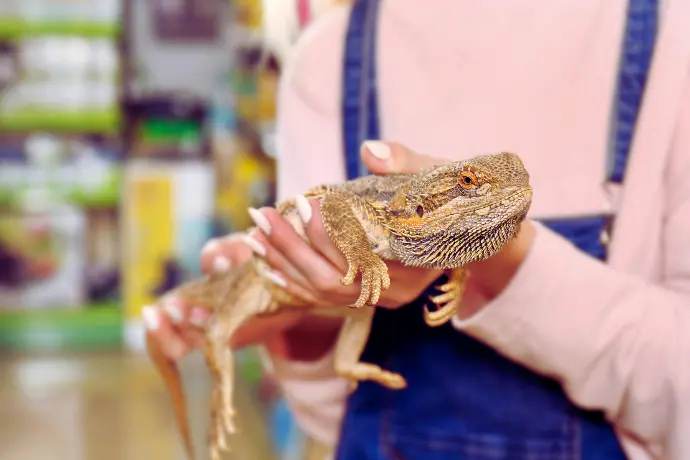
In line with a decision made by Pets Canada’s National Board of Directors, the association was asked to prepare a set of recommended stocking densities for pets kept in a pet retail environment. This document represents the sixth segment of the exercise and refers to reptiles.
The following draft is the result of some extensive research. It is expected that this document will be subject to additional consultation. At this point in its development, the document reflects the expertise identified and selected by the staff of Pets Canada. Through our involvement with the International Pet Advisory Council we were able to review pertinent documents referred by other sources around the world, including the State of Colorado’s published Animal Care Facilities guidelines, the European Convention for the Protection of Vertebrate Animals and the Pet Industry Association of Australia National Codes of Practice.
Assumptions
The following assumptions have been taken into account in establishing the recommendations appearing in this document:
- Definition of Pet retail environment. “Pet retail environment” means any place or premise used in whole or in part, whether on a permanent or temporary basis, for the purpose of retail sale, trading, bartering, or otherwise transferring pet animals to the public.In addition to the traditional pet shop or wholesaler, pet retail environments shall include the keeping for transfer or the transfer of pet animals at temporary facilities such as flea markets, mobile facilities, department stores, merchandise outlets, discount outlets, pet animal shows conducting a sale, and other types of retail outlets.
- “Reptile” means an aquatic or terrestrial reptile and amphibians.
- The minimum needs for socialization and exercise (when applicable) are met.
- “Housing unit” means any aquarium or other enclosure used to house a reptile but does not include housing in a container while transporting a reptile outside a companion animal establishment.
- Notwithstanding the other assumptions, it is understood that while this document specifically refers to stocking densities, it is assumed that all other pertinent animal welfare considerations, as outlined in other Pets Canada publications, are being met.
- The housing units shall comply with the following:
a. Height of housing unit must not be less than 10 cm from the top of the head of the tallest reptile to the ceiling of the housing unit, as measured when the reptile is standing and must allow the animal to stretch fully upright.
b. It is recommended that reptiles from different clutches should be housed in separate enclosures to avoid any possible cross-contamination.
In light of these assumptions, Pets Canada recommends the following as suggested cage stocking densities for reptiles kept in a pet retail environment.
Recommended stocking density for reptiles in a pet store environment (revised October 2018):
Species Type | Size of animal without the tail (cm) | Area for one animal (cm2) | For an additional animal (cm2) | Other specifications |
| Terrestrial and semi-aquatic frogs | Less than 4 4 to 8 8 to 12 12 to 16 16 to 20 | 200 400 800 1600 2500 | 100 200 400 800 1250 | A basin should occupy at least 50% of the area for semi-aquatic species. |
Terrestrial and semi-aquatic salamanders | Less than 4 4 to 8 8 to 12 12 to 16 | 150 200 400 800 | 75 100 200 400 | A basin should occupy at least 50% of the area for semi-aquatic species. |
Fully aquatic frogs and salamanders | Less than 4 4 to 8 8 to 12 | 150 200 400 | 75 100 200 | Water depth should be more than the length of the animal. |
Arboreal frogs | Less than 4 4 to 8 More than 8 | 150 300 600 | 75 150 300 | Height should be at least 30 cm. |
Species Type | Size of animal without the tail (cm) | Area for one animal (cm2) | For an additional animal (cm2) | Other specifications |
Terrestrial lizards | Less than 4 4 to 7 7 to 13 13 to 20 20 to 25 | 300 500 800 1900 3300 | 150 250 400 950 1650 | A basin should occupy at least 30% of the area for semi-aquatic species. |
Arboreal lizards | Less than 4 4 to 7 7 to 13 13 to 20 20 to 25 | 220 380 650 1700 2200 | 110 190 325 850 1100 | Height should correspond to at least 3 times the length of the animal. |
Species Type | Size of animal without the tail (cm) | Area for one animal (cm2) | For an additional animal (cm2) | Other specifications |
Snakes (total length) | Less than 30 30 to 60 60 to 90 90 to 120 120 to 150 150 to 180 180 to 210 210 to 240 | 200 400 700 1600 2600 3900 5400 7000 | 100 200 350 800 1300 1950 2700 3500 | Height for arboreal species should correspond to at least 40% of the animal’s length. A basin should occupy at least 50% for the area for semi-aquatic species. |
Species Type | Size of animal without the tail (cm) | Area for one animal (cm2) | For an additional animal (cm2) | Other specifications |
Tortoises (terrestrial) (shell length) | Less than 10 10 to 15 15 to 20 20 to 30 | 700 1700 2800 4700 | 350 850 1400 2350 | |
Turtles (aquatic) (shell length) | Less than 10 10 to 15 15 to 20 20 to 30 | 500 1400 2300 3800 | 250 700 1150 1900 | Depth in the middle of the swimming basin should be more than the length of the shell. An area completely above water must be accessible. |
Recommended Retail Space Requirements: Juvenile Small Animals
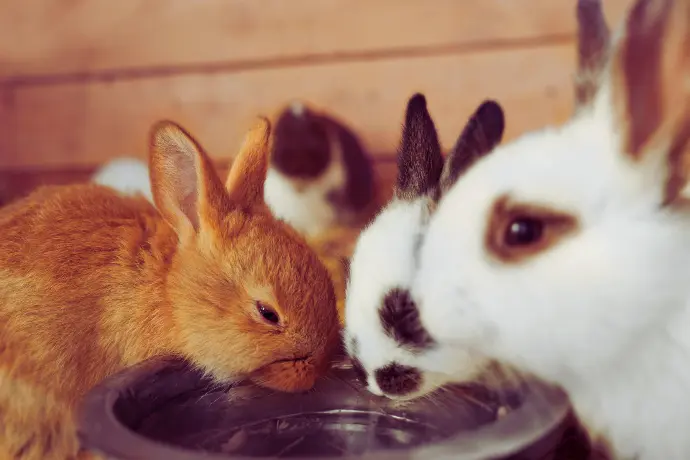
In line with a decision made by Pets Canada’s National Board of Directors, the association was asked to prepare a set of recommended space requirements for pets kept in a pet retail environment. This document represents the third segment of the exercise and refers to small animals.
The following document is the result of some extensive research. Before its completion, it is expected that this document will be subject to additional consultation. At this point in its development, the document reflects the expertise identified and selected by the staff of Pets Canada. Through our involvement with the International Pet Advisory Council we were able to review pertinent documents referred by other pet industry associations around the world, including the State of Colorado’s published Animal Care Facilities guidelines, the Pet Care Trust and Guidelines from Waverly, Great Britain.
Assumptions
The following assumptions have been taken into account in establishing the recommendations appearing in this document:
- Definition of Pet retail environment. “Pet retail environment” means any place or premise used in whole or in part, whether on a permanent or temporary basis, for the purpose of retail sale, trading or otherwise transferring pet animals to the public.In addition to the traditional pet shop or wholesaler, pet retail environments shall include the keeping for transfer or the transfer of pet animals at temporary facilities such as flea markets, mobile facilities, department stores, merchandise outlets, discount outlets, pet animal shows conducting a sale, and other types of retail outlets.
- Notwithstanding the other assumptions, it is understood that while this document specifically refers to space requirements, it is assumed that all other pertinent animal welfare considerations, as outlined in other Pets Canada publications, are being met. More specifically this means:
- Primary enclosures are those animal enclosures in which the animal normally rests or sleeps (also referred to as housing).
- Primary enclosures shall be structurally sound and maintained in good repair to protect the animals from injury and to contain them. Primary enclosures shall be constructed such that they can be routinely maintained to allow animals to stay dry and clean (as appropriate for the species) and to provide convenient access to clean food and water. The floor of the primary enclosure shall be constructed to prevent injury to the animals’ feet and legs. All the surfaces of the primary enclosure must be constructed of a material that is water resistant and can be cleaned and sanitized. All primary enclosures shall allow each pet animal to turn around, exercise normal postural movements, and to experience necessary socialization with cage mates.
- Display cases may be utilized as primary enclosures during the workday; however, animals should not be kept in display cases overnight unless the display case also meets the requirements of and functions as a primary enclosure.
- Display cases must be constructed of a material that is water resistant and can be cleaned and sanitized. Display cases must be well constructed and kept in good repair. The area around the display case must be well ventilated to prevent odor buildup. Display cases for small animals shall be maintained in good repair and constructed of non-toxic metal or other water resistant material, which can be cleaned and sanitized
In light of these assumptions, Pets Canada recommends the following as suggested cage space requirements for small animals kept in a pet retail environment.
General considerations: Minimum Space Requirements:
(a) The housing must be large enough to provide full body extension without contact with the confines and must be wide enough in at least one direction to accommodate the animal to turn around freely.
(b) Sufficient food should be available at all times and water should be fresh daily. Food and water containers should be placed to avoid fecal contamination.
(c) Minimum space requirements for multiple small animals housed temporarily depend on the calculated Housing Density Factor and the overall length of the small animal. Additional small animals are added as space allows based on the formula.
(d) The housing units must include a sufficient amount of hiding places for all animals to hide.
The following calculation will be used to determine the number of small animals that could be housed in a given enclosure :
A + B = C
- Where A = 1, (represents the calculation of the first bird’s space requirements (see Density Factor Chart)).
*If this is less than one (1), this means this cage is not suitable for this type of small animal . - where Bis the calculation of how many additional small animals may be suitably added,
- where Cis equal to the total small animals suggested for that particular space.
Calculation of A:
(cage base size in sq. cm.) – (single small animal need)
where the answer is > 0*, then A = 1
Calculation of B:
(cage base size in sq. cm. ) – (single small animal need) = B (rounded down)
(additional small animal needs)
Calculation of C:
A +B =C
Example: What is the suggested maximum number of cockatiels in a 2400 sq. cm. cage?
A=
(1710 sq. cm.) – (1st hamster @ 400 sq.cm.)
where the answer is > 0*, then A = 1
B =
(1710 – 400)
Additional hamsters needs @ 75 sq. cm. B = 17.4, rounded down to 17
C =
18
Space requirements are calculated on the actual base floor space and represent the maximum number of small animals recommended per cage, regardless of multi-levels or attachments to the outside of the cage.
Outdoor Pens. The size, shape, and design of the cages shall be appropriate for the species being housed and shall allow space, without overcrowding, for the normal exercise requirements of each small animal. Cages shall be constructed to prevent injury to small animals. A covered portion of each cage shall be provided where small animals can avoid direct sunlight or adverse weather conditions and commingling with non-captive animals.
Density Factor Chart
Small animal species (juveniles) | Single small animal needs (sq. cm.) | Additional small Animal needs (sq. cm.) | Height (cm.) |
mice & dwarf hamsters | 400 | 75 | 20 |
hamsters & gerbils | 400 | 155 | 20 |
rats & degus hedgehogs | 600 840 | 300 420 | 20 25 |
ferrets & chinchillas | 1500 | 500 | 35 |
1-3 small animal needs | Additional small Animal needs | Height | |
guinea pigs < 750g | 1500 | 450 | 25 |
750g | 2400 | 800* *Note – animals that size may need to be separated because of aggression or mating. | 25 |
1-2 small animal needs | Additional small Animal needs | Height | |
rabbits <1.5 kg | 2400 | 900 | 35 |
1.5 to 2.5 kg | 3000 | 2000 | 35 |
>2.5 kg | 5000 | *Note – animals that size may need to be separated because of aggression or mating. | 40 |
* note- small animals at this size may have to be separated due to aggression and/or mating issues.